


To Share or Not to Share. Why pre-contractual information is essential in commercial collaborations.
Are you an entrepreneur entering into a commercial collaboration - such as a franchise, distribution, agency, or concession - and granting the other party the right to use your commercial formula (think of a shared trade name, transfer of know-how, or commercial/technical assistance)? Then you are legally obliged to thoroughly inform your (future) partner in advance. Recently, this duty to inform has been expanded and tightened by the legislator. This obligation to inform is not optional: failure to comply can lead to serious sanctions.
What does this duty to inform entail exactly?
Before signing an agreement, you must provide your contracting partner with two documents:
1. The draft collaboration agreement
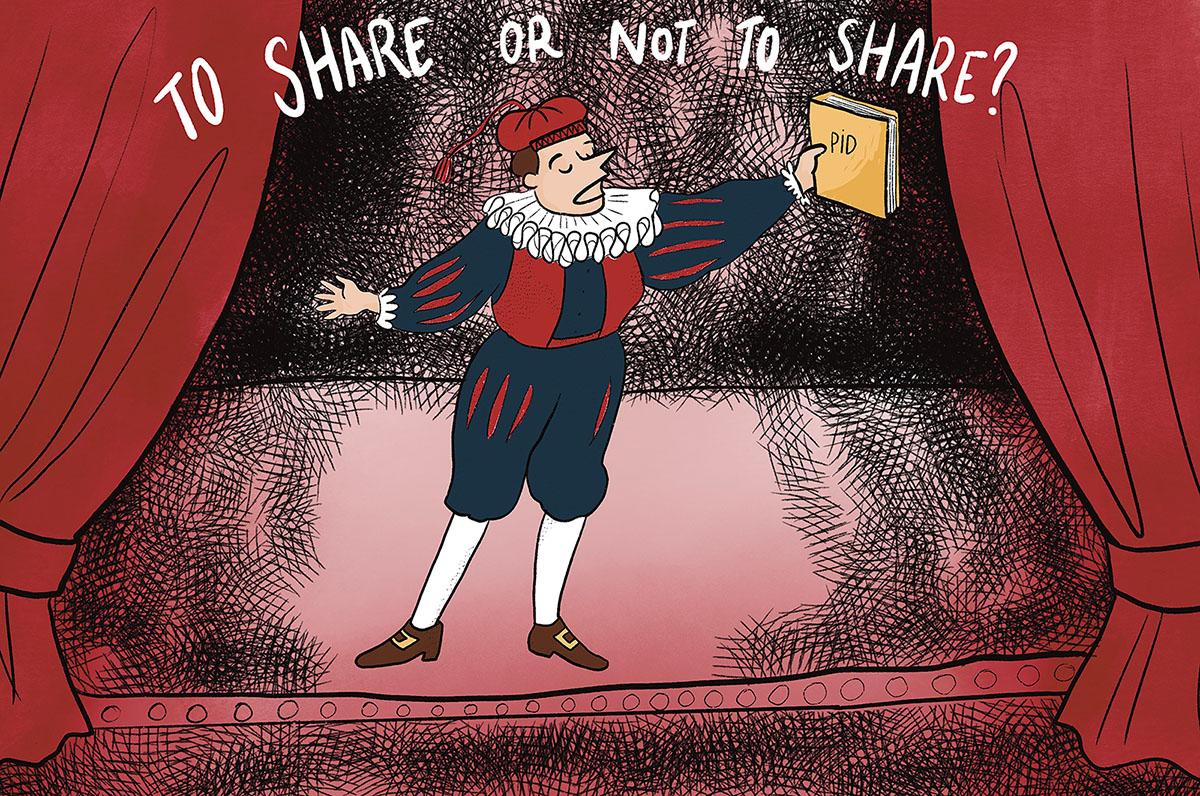
2. The pre-contractual information document (PID)
The PID is the central document and consists of two parts, which must include at least the following information:
- Key contractual provisions, such as: who are the contracting parties, what is the duration, how do termination or renewal work, what are the fees involved, what costs are associated, are there non-compete clauses, etc.?
- Essential business information: your company details, the nature of your activities, financial statements for the last three years, and an overview of the investments and burdens the other party must take on.
This also applies to extensions or modifications!
Is an existing collaboration being extended or modified? Then a simplified PID is sufficient, but this must also be provided at least one month in advance. In such cases, it suffices to include the new or amended contractual provisions.
What if you don’t comply with these rules?
The law is strict: if you do not (timely) provide the PID or if it is incomplete, your partner can challenge the validity of the contractual provisions not included in the PID within two years — or even invoke the nullity of the entire agreement. This means the agreement will be considered as never having existed.
Consequences: You must repay all received fees (such as royalties or entry fees) and may also have to pay additional compensation for costs and investments made. Think of costs to suppliers and utility companies, investments in retail space, recruitment costs and paid salaries, interest on business loans, …
Why is this so important?
These rules are designed to protect the weaker party – but they also protect you as an entrepreneur from disputes later on. A correct and complete PID ensures transparency and avoids unpleasant surprises.
In short: make sure you are well informed and take these obligations seriously.
Do you have questions or need assistance drafting or reviewing your PID? The commercial law team at Andersen in Belgium is ready to assist you with this.
David Van Iseghem (Partner – Mediator) – Marnix Van Den Plas (Associate)
Discover more about this topic?
I am looking for a specialist in
















See more articles

05.10.2026
•NEWS FROM THE FIRM
Luc Herve joins Andersen as the firm opens a new office in Liège
We are pleased to announce that Luc Herve's law firm has joined Andersen in Belgium, which opened a new office in Liège in September. Luc Herve joins Andersen as a Partner, bringing more than thirty years of experience in tax law, alongside his academic work and role as an accredited mediator. He is joined by Jérémy Lerusse, Associate. Both are members of the Liège Bar.

01.10.2026
•Real Estate, Renting and Co-ownership, Andersen in Belgium
New Code of Ethics for Real Estate Agents: More Than a Mere Update
On 21 September 2026, the Royal Decree of 20 July 2026 approving the new Code of Ethics of the Professional Institute of Real Estate Agents (BIV) was published in the Belgian Official Gazette. The new Code enters into force on 1 October 2026, the date on which the 2018 regulations are repealed.

29.09.2026
•Urban Planning and Environmental Law, Andersen in Belgium
Financially contributing to a spatial implementation plan (RUP) poses a risk to your permit
A developer who contributes financially to the drafting of a spatial implementation plan may thereby jeopardize their integrated environmental permit. This follows a ruling by the Council for Permit Disputes dated September 17, 2026. The ruling addresses a practice that is widespread throughout Flanders.

17.09.2026
•Urban Planning and Environmental Law, Andersen in Belgium
Health organisations to become part of the public concerned in urban and environmental permitting procedures
Non-governmental organisations dedicated to protecting human health will soon be able, like environmental protection organisations, to qualify as part of the “public concerned” in urban and/or environmental permitting procedures. This will broaden the range of organisations that may challenge a permitting decision, adding a new dimension to future permitting procedures.