


Emilie Javid Milani
Senior Associate
Commercial and Economic Law / Construction Law / Real Estate, Renting and Co-ownership


A thorough and clear approach, mindful of the client’s needs.
Emilie has been member of the Brussels Bar since 2022. She began her career at a law firm specializing in construction, contract and commercial law.
As of March 2025, she joins the team of Andersen and will focus on Real Estate, Renting, and Co-ownership, and Construction Law.
Expertises

Real Estate, Renting and Co-ownership

Construction Law

Commercial and Economic Law
Qualification
- Bachelor of Laws - KU Leuven (Katholieke Universiteit Leuven) - 2018
- Master of Laws (specialty in Private Law - minor Criminal Law) - KU Leuven (Katholieke Universiteit Leuven) - 2021
Languages
- Dutch
- French
- English
- Farsi
Legal News
08.07.2026
•Real Estate, Renting and Co-ownership, Andersen in Belgium
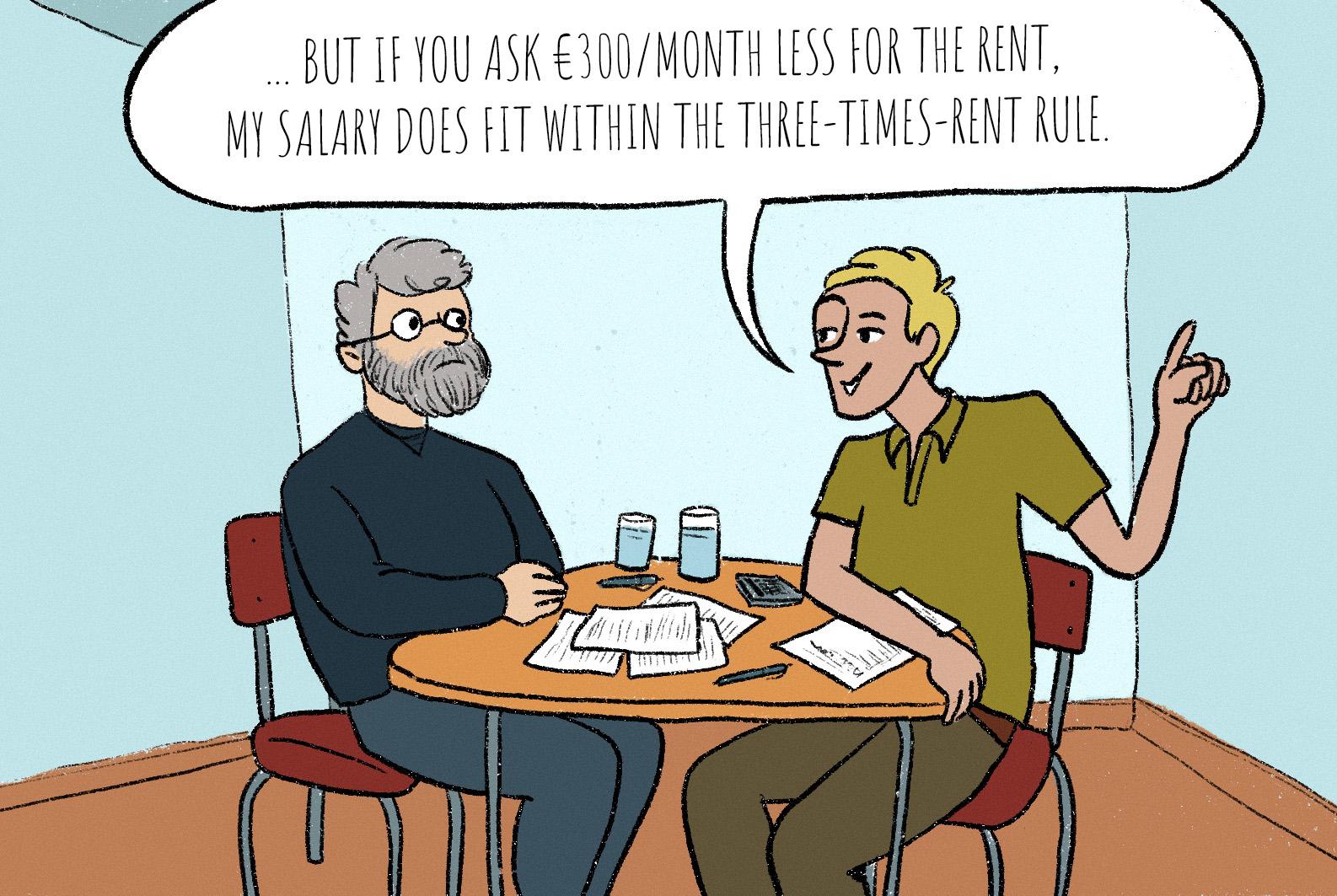
The three-times-rent rule holds: Council of State clarifies tenant selection
Can a landlord refuse a prospective tenant because their income is less than three times the rent? This question has been central to the debate on discrimination in the rental market for several years. In a judgment of 30 March 2026, the Council of State expressly addressed this so-called “three-times-rent rule” for the first time. The judgment provides important clarification for landlords, real estate investors and real estate agents. The Council of State does not hold that the three-times-rent rule is automatically permissible in all circumstances. It does, however, consider that an income requirement equal to three times the rent and charges is not, in itself, disproportionate and therefore cannot, without more, be regarded as prohibited discrimination on the basis of wealth.

02.06.2026
•Tax Law, Andersen in Belgium
The Reform of the Flemish Preferential Regime for Family Companies: Impact and Key Considerations
Transferring a family business or family company, whether by donation or inheritance, generally involves significant taxes. To help family businesses continue operating across generations, the Flemish legislator has long provided a favourable tax regime that significantly reduces these taxes.

02.03.2026
•Real Estate, Renting and Co-ownership, Andersen in Belgium, LEGAL NEWS
Purchase of a Sole and Principal Residence in Flanders? Stricter Conditions for the 2% Registration Duty as of 1 January 2026
Individuals acquiring a sole and principal home in Flanders may, since 1 January 2025 and subject to certain conditions, benefit from the reduced 2% registration duty instead of the standard rate of 12%.

13.06.2025
•Real Estate, Renting and Co-ownership, Andersen in Belgium, Case
Is it possible to combine refusal to pay an invoice with a claim for damages in construction contracts? The Court of Cassation rules on the “double sanction” for contractual breach
When a developer suffers loss because works have been carried out defectively, the following question regularly comes up: may the developer, in addition to claiming damages, also refuse to pay (part of) the contract price? The Belgian Court of Cassation recently examined this point in a ruling of November 8, 2024. The ruling re-affirms fundamental principles of the law of damages and has significant consequences for the day-to-day practice of construction contracts.