


Gradual Abolition of the Marital Quotient – What Impact on Your Tax Position?
The draft bill on the reform of personal income tax, submitted to Parliament on 14 January 2026, provides for the gradual abolition of the marital quotient mechanism. Once adopted, this measure will significantly affect the tax position of many single-income couples or couples with highly unbalanced incomes.

Proposed measures
The marital quotient, which applies to married couples and legally cohabiting partners, currently allows up to 30% of the professional income of the higher-earning partner to be notionaly attributed to the other partner where the latter earns little or no professional income.
This attribution is, however, subject to a cap (€13,460 for assessment year 2026).
The draft bill provides for a gradual abolition, with differentiated rules depending on the taxpayers concerned:
- For couples where both partners have reached the statutory retirement age, the mechanism would be maintained on a transitional basis, but phased out gradually over a period of approximately twenty years. The 30% rate would be retained during this period, while the maximum amount would be progressively reduced, leading to a complete abolition as from assessment year 2046.
- For all other taxpayers, the maximum amount of the marital quotient would be reduced by half over four assessment years (from assessment year 2027 to assessment year 2030).
- As from assessment year 2027, the maximum applicable amounts would no longer be indexed.
Rationale put forward by the legislator
The reform is driven by the intention to strengthen tax neutrality between different forms of cohabitation, as the marital quotient is not available to de facto cohabitants. It also reflects a broader shift towards a tax system that is less centred on the single-income household model. Finally, the legislator considers that the mechanism may act as a disincentive to labour market participation by the second partner.
In practice, this reform may result in a gradual increase in the tax burden for certain households, making it advisable to anticipate its impact in light of the household’s income structure.
As the bill has not yet been definitively adopted, amendments remain possible. We will, of course, keep you informed of further developments.
At Andersen in Belgium, we remain at your disposal to assess the concrete impact of these measures on your personal tax situation.
If you have any questions about this topic or require assistance in the context of a dispute with the tax authorities, please do not hesitate to contact the tax department at Andersen.
Sébastien Watelet (Tax Partner) & Océane Magotteaux (Associate)
Discover more about this topic?
I am looking for a specialist in












See more articles

05.10.2026
•NEWS FROM THE FIRM
Luc Herve joins Andersen as the firm opens a new office in Liège
We are pleased to announce that Luc Herve's law firm has joined Andersen in Belgium, which opened a new office in Liège in September. Luc Herve joins Andersen as a Partner, bringing more than thirty years of experience in tax law, alongside his academic work and role as an accredited mediator. He is joined by Jérémy Lerusse, Associate. Both are members of the Liège Bar.

01.10.2026
•Real Estate, Renting and Co-ownership, Andersen in Belgium
New Code of Ethics for Real Estate Agents: More Than a Mere Update
On 21 September 2026, the Royal Decree of 20 July 2026 approving the new Code of Ethics of the Professional Institute of Real Estate Agents (BIV) was published in the Belgian Official Gazette. The new Code enters into force on 1 October 2026, the date on which the 2018 regulations are repealed.

29.09.2026
•Urban Planning and Environmental Law, Andersen in Belgium
Financially contributing to a spatial implementation plan (RUP) poses a risk to your permit
A developer who contributes financially to the drafting of a spatial implementation plan may thereby jeopardize their integrated environmental permit. This follows a ruling by the Council for Permit Disputes dated September 17, 2026. The ruling addresses a practice that is widespread throughout Flanders.
17.09.2026
•Urban Planning and Environmental Law, Andersen in Belgium
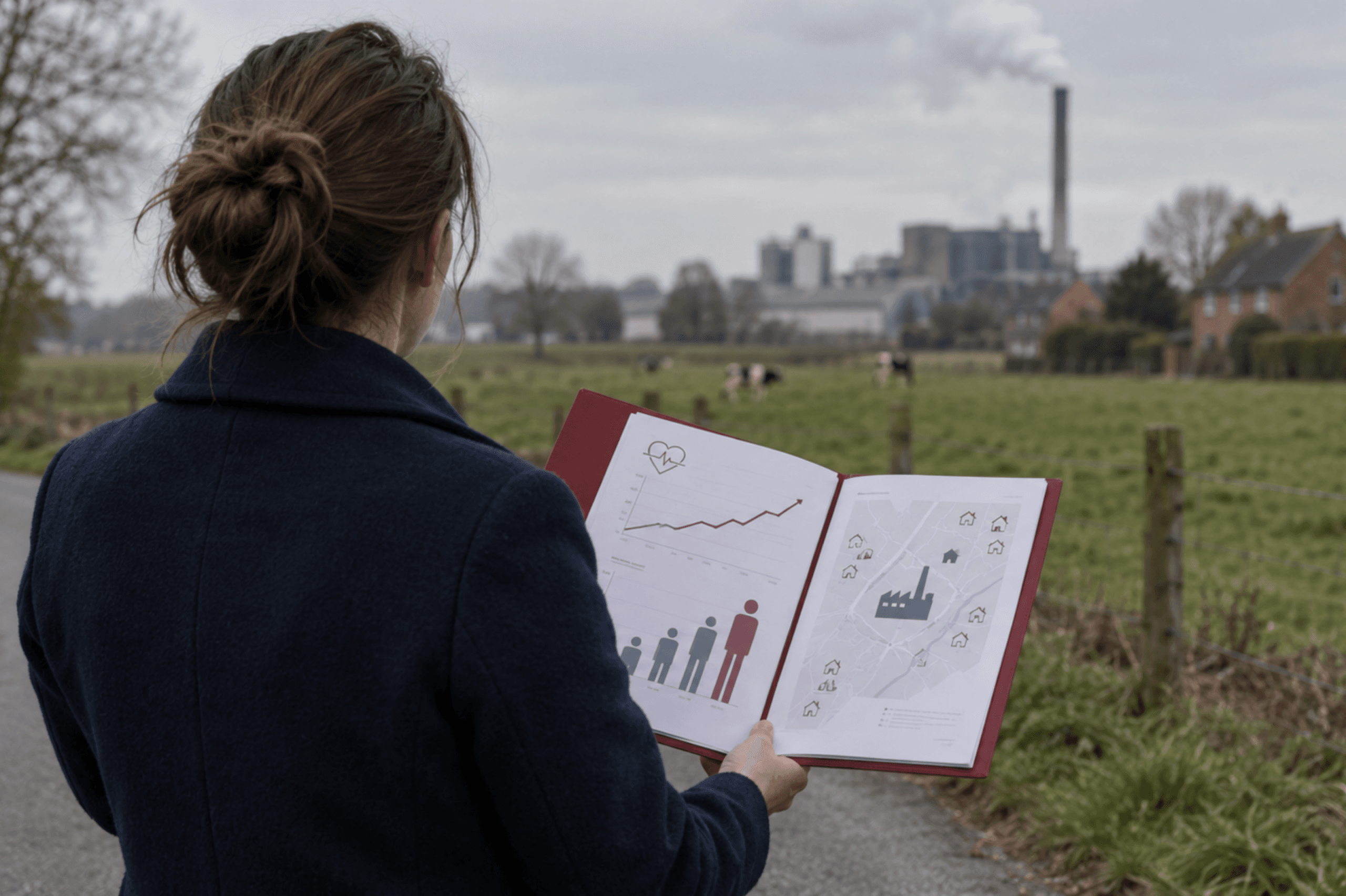
Health organisations to become part of the public concerned in urban and environmental permitting procedures
Non-governmental organisations dedicated to protecting human health will soon be able, like environmental protection organisations, to qualify as part of the “public concerned” in urban and/or environmental permitting procedures. This will broaden the range of organisations that may challenge a permitting decision, adding a new dimension to future permitting procedures.