


Copyright taxation: abolition of the flat-rate assessment of expenses
The Programme Law of 30 May 2026 has introduced - with retroactive effect from 1 January 2026 - a new condition for applying the flat-rate deduction of expenses from the gross income derived from copyright and related rights.

Copyright and related rights income is classified as movable income. It may fall within the scope of either Article 17, § 1, 3° or Article 17, § 1, 5° of the Belgian Income Tax Code (“ITC”). The application of Article 17, § 1, 5° is subject to compliance with the conditions set out therein.
It should be noted that the Minister of Finance clarified, during the parliamentary proceedings, that the transfer of copyright or related rights cannot fall under point 3°, which covers only licensing (the granting of usage rights). If a transaction is covered by neither point 3° nor point 5°, it should be classified as miscellaneous income. However, the tax authorities will probably argue that such income constitutes professional income – a position that, in our view, is incorrect.
As a general principle, only net income is taxable.
Article 22, § 3 of the ITC provides that, for copyright and related rights, taxable net income consists of gross income less the expenses incurred to acquire or retain that income. In the absence of supporting evidence, these expenses are assessed on a flat-rate basis, in accordance with percentages set by Royal Decree.
Prior to the amendment, expenses were assessed at a flat rate of 15% for income falling under Article 17, § 1, 3° of the ITC (Article 3 of the Royal Decree implementing the ITC). For income falling under Article 17, § 1, 5° of the ITC, the rate was increased to 50% on the first bracket of EUR 10,000 (an amount subject to indexation) and 25% on the second bracket of EUR 10,000 (also subject to indexation) (Article 4, 1° of the Royal Decree implementing the ITC.The question of which expenses remain deductible beyond the second bracket continues to be debated: the tax authorities take the position that no further expenses are deductible.
The Programme Law adds a new paragraph to both Article 3 and Article 4, specifying that the flat-rate deduction is now applicable only to income derived from activities for which the taxpayer holds, at the time the income is paid or attributed, an “arts work certificate”.
This arts work certificate is only available to authors and artists who can demonstrate professional artistic practice in the arts. It must be requested from the Arts Work Commission. In assessing whether an artistic practice qualifies, the Commission will only take into account activities carried out within recognised artistic fields, namely audiovisual arts, visual arts, music, literature, performing arts, theatre, choreography, and comic art.
As a result, taxpayers who are unable to obtain this certificate can no longer benefit from the flat rates provided for in Articles 3 and 4 of the Royal Decree implementing the ITC. In addition, artists holding a so-called “starter” certificate are also excluded, on the grounds that they have not yet developed a professional artistic activity.
The abolition of the flat-rate assessment of expenses does not, however, prevent taxpayers from deducting their actual expenses. In practice, this option is more difficult to apply, since the taxpayer must be able to substantiate the reality and amount of these expenses, as well as their connection to the income concerned.
The new measure enters into force with retroactive effect from 1 January 2026. However, payers of such income only need to apply this new provision to attributions of copyright and related rights made as from 10 June 2026, 10 days after the publication of the Programme Law in the Belgian Official Gazette.
It is worth emphasising that even where a taxpayer holds the arts work certificate, the flat-rate expense deduction will only be available for copyright or related rights income arising from the activity underlying the certificate.
Finally, the text specifies that the certificate must be held at the time the income is attributed. A strict reading would imply that authors or artists can only benefit from the flat-rate deduction from the moment they actually obtain the certificate. It is therefore essential for those who meet the conditions but do not yet hold the certificate to submit their application to the Commission. Further information is available at: https://www.workinginthearts.fgov.be/fr/professionnel/attestation-du-travail-des-arts/attestation
This new measure is highly questionable as a matter of principle. Actions for annulment before the Constitutional Court are currently being prepared.
Discover more about this topic?
I am looking for a specialist in










See more articles
05.10.2026
•NEWS FROM THE FIRM
Luc Herve joins Andersen as the firm opens a new office in Liège
We are pleased to announce that Luc Herve's law firm has joined Andersen in Belgium, which opened a new office in Liège in September. Luc Herve joins Andersen as a Partner, bringing more than thirty years of experience in tax law, alongside his academic work and role as an accredited mediator. He is joined by Jérémy Lerusse, Associate. Both are members of the Liège Bar.

01.10.2026
•Real Estate, Renting and Co-ownership, Andersen in Belgium
New Code of Ethics for Real Estate Agents: More Than a Mere Update
On 21 September 2026, the Royal Decree of 20 July 2026 approving the new Code of Ethics of the Professional Institute of Real Estate Agents (BIV) was published in the Belgian Official Gazette. The new Code enters into force on 1 October 2026, the date on which the 2018 regulations are repealed.

29.09.2026
•Urban Planning and Environmental Law, Andersen in Belgium
Financially contributing to a spatial implementation plan (RUP) poses a risk to your permit
A developer who contributes financially to the drafting of a spatial implementation plan may thereby jeopardize their integrated environmental permit. This follows a ruling by the Council for Permit Disputes dated September 17, 2026. The ruling addresses a practice that is widespread throughout Flanders.
17.09.2026
•Urban Planning and Environmental Law, Andersen in Belgium
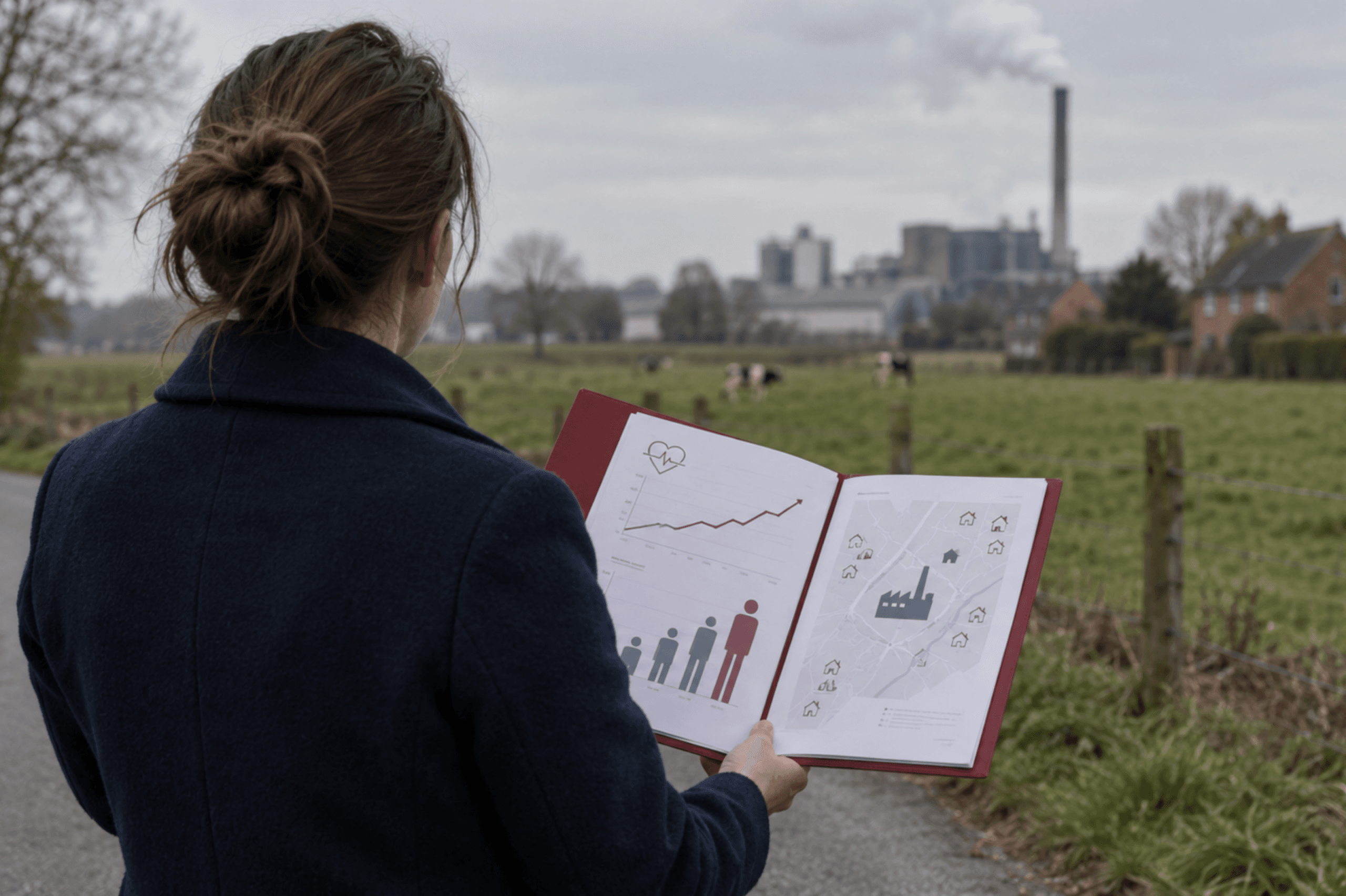
Health organisations to become part of the public concerned in urban and environmental permitting procedures
Non-governmental organisations dedicated to protecting human health will soon be able, like environmental protection organisations, to qualify as part of the “public concerned” in urban and/or environmental permitting procedures. This will broaden the range of organisations that may challenge a permitting decision, adding a new dimension to future permitting procedures.