


Asbestos certificate for commonly used parts: what will change in Flanders as of May 1, 2025?
The regulations surrounding asbestos certificates have evolved significantly in recent years. An important distinction made explicitly since July 2024 is that between common parts and commonly used parts. As of May 1, 2025, new obligations will apply to the latter category. What exactly does that mean?
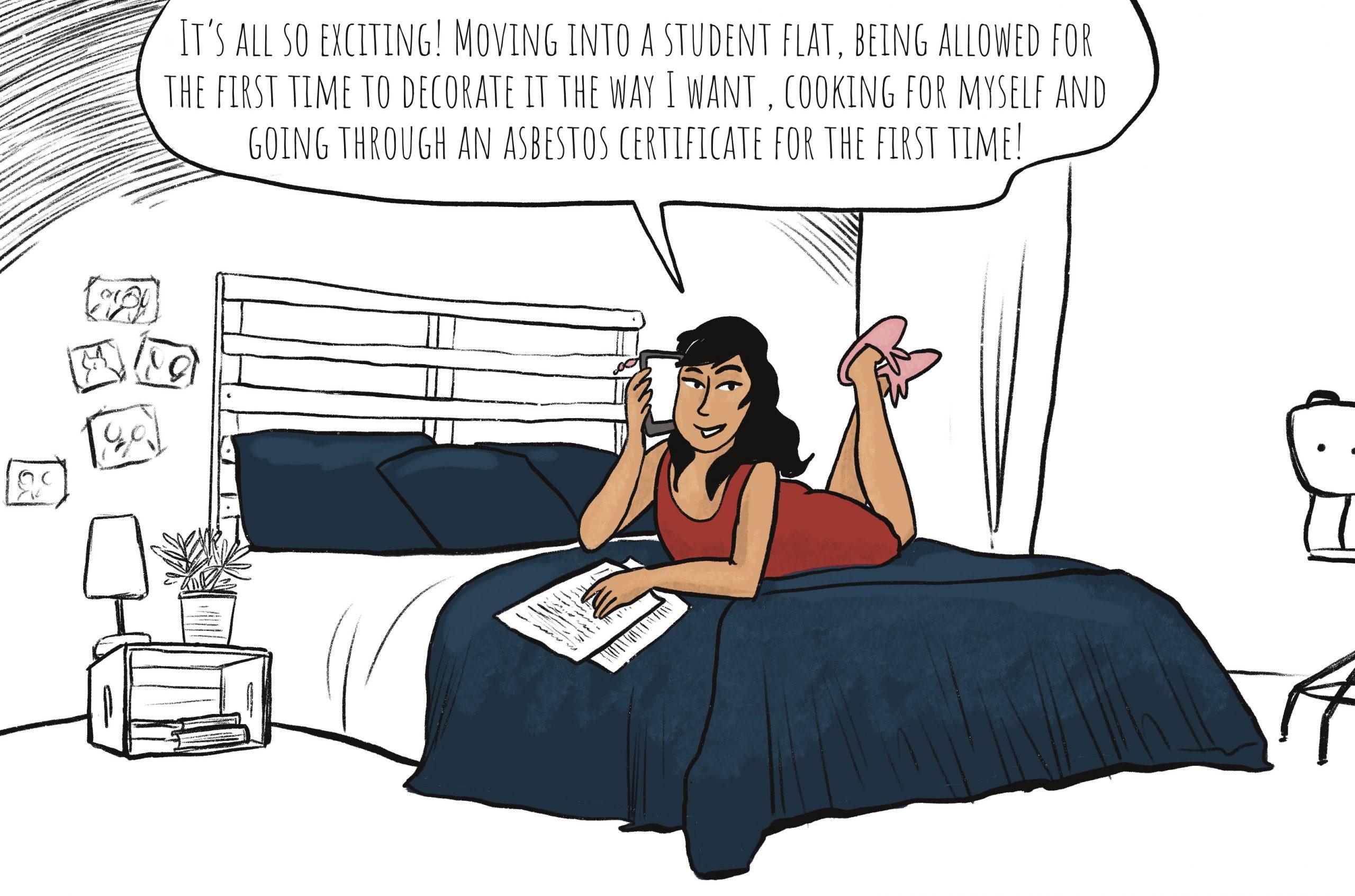
Common parts vs. commonly used parts
Common parts are the parts of a co-owned building, such as in apartment buildings where several owners have a share in the common areas (for example, the entrance hall, stairwell or elevator). These situations require an asbestos certificate for common parts. This requirement takes effect on Jan. 1, 2027, but already applies now if such a certificate has already been voluntarily prepared.
Commonly used parts are parts of a building owned by one person, but shared by multiple users, such as tenants or residents. Think of buildings with student rooms, co-housing projects, or a residence with practice space. Here, there is no co-ownership, but there is shared use. In these cases, from May 1, 2025, a separate asbestos certificate for shared-use parts will be required upon transfer.
Obligation as of May 1, 2025
When a pre-2001 building is sold and the building is divided into multiple units of use (called inspection areas), such as multiple apartments, rooms or commercial areas, a separate asbestos certificate must be prepared for each unit of use. In addition, a separate asbestos certificate is also required for the jointly used parts. This obligation applies from May 1, 2025, to buildings that are shared-use, regardless of whether there is co-ownership.
If the building is not divided into different inspection areas, one general asbestos certificate for the entire building will suffice, but only as of Jan. 1, 2027.
Application examples
- Student housing: If an owner sells a building with student rooms, there must be separate certificates for each room as well as for the shared areas such as the kitchen and stairwell (from May 1, 2025).
- Mixed-use buildings: For buildings with both offices and apartments, multiple attestations are generally required: for each residential unit, for the offices and for the shared areas (as of May 1, 2025).
- Wholly-owned apartment: If an owner sells an apartment in a building where he is the sole owner, from the time of sale, it will be common parts and the requirement of an asbestos attestation will apply from January 1, 2027.
Why to take action now?
The requirement to provide an asbestos certificate for common parts enters into force on January 1, 2027, and for commonly used parts it is May 1, 2025. Given the expected pressure on the number of licensed asbestos experts as those dates approach, it is advisable not to wait. For more information on this subject, you can always contact Andersen’s Real Estate team.
For a comprehensive overview of the legislation governing the real estate sector in Flanders and Brussels, you can consult the new “Vastgoedcodex”, published in collaboration with KnopsPublishing.
Buy a copy (print or download – Dutch) here: https://nl.knopspublishing.be/shop/boeken/burgerlijk-recht/vastgoedcodex-vlaanderen-brussel-2025-2026/
The Real Estate team at Andersen is here to support you. Should you have any questions on this subject, please do not hesitate to contact our specialists at info@be.Andersen.com or +32 2 747 40 07.
Discover more about this topic?
I am looking for a specialist in







See more articles
23.06.2026
•Commercial and Economic Law, Andersen in Belgium
Serial Returners: When Consumer Protection Becomes Consumer Abuse
The growth of e-commerce has fundamentally transformed consumer behaviour. To encourage online purchasing, retailers have progressively introduced customer-friendly policies: free delivery, free returns, extended return periods, and no-questions-asked refunds.

11.06.2026
•NEWS FROM THE FIRM
Jan Ghysels joins Andersen European Energy Industry Group Meeting in Frankfurt
Our Partner Jan Ghysels recently took part in the Andersen European Energy Industry Group Meeting, hosted by Andersen in Germany in Frankfurt. The meeting brought together colleagues from across the Andersen network, as well as industry professionals and guest speakers active in key areas of the global energy sector.

09.06.2026
•Real Estate, Renting and Co-ownership, Andersen in Belgium
Bill Proposes Cap on Real Estate Agents’ Commissions
Access to the housing market in Belgium has been under increasing pressure for some time. Sale prices continue to rise, rental prices are following the same trend, and significant additional costs are often incurred on top of these amounts. One such cost is the commission charged by real estate agents, for which no statutory maximum currently exists.

05.06.2026
•Tax Law, Andersen in Belgium
How far does a judge’s duty extend to examine ex officio whether a contested tax assessment can be upheld?
In a judgment dated 21 May 2026, the Belgian Supreme Court addressed two significant procedural issues in tax matters.