


Health organisations to become part of the public concerned in urban and environmental permitting procedures
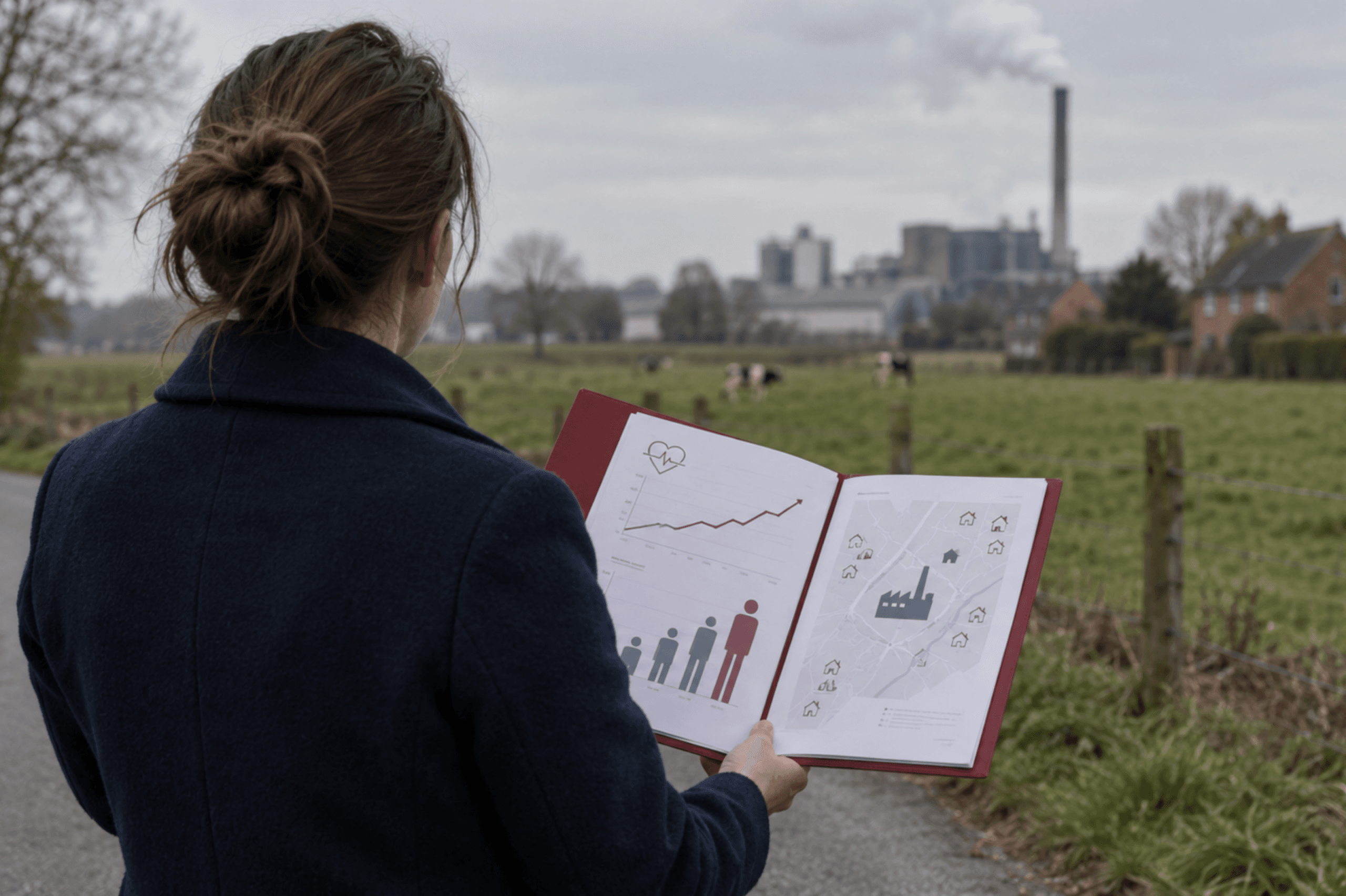
Non-governmental organisations dedicated to protecting human health will soon be able, like environmental protection organisations, to qualify as part of the “public concerned” in urban and/or environmental permitting procedures. This will broaden the range of organisations that may challenge a permitting decision, adding a new dimension to future permitting procedures.
What is the “public concerned”?
The Flemish Environmental Permitting Decree (Omgevingsvergunningsdecreet – OVD) defines the public concerned as natural or legal persons, associations or organisations that are affected or likely to be affected by an urban and/or environmental permit, or that have an interest in the decision concerning such a permit (Article 2, 1° OVD).
Qualifying as part of the public concerned gives these persons and organisations several opportunities to participate in a permitting procedure. During the public consultation, for example, they may submit their views, comments and objections. Subject to certain conditions, they may also lodge an administrative appeal against a decision taken at first administrative instance or bring proceedings before the Council for Permit Disputes against a decision taken at final administrative instance.
The status of “public concerned” therefore gives third parties a formal role in the permitting procedure, ranging from participation during the public consultation to challenging a permitting decision.
Certain non-governmental organisations (NGOs) benefit from an important presumption in this respect: they are deemed to have an interest. To date, this presumption has applied only to NGOs dedicated to environmental protection.
What is changing?
An amending decree of 10 July 2026, which transposes the revised European Industrial Emissions Directive (IED 2.0) into Flemish legislation, extends the existing presumption to NGOs dedicated to protecting human health.
As a result, not only NGOs active in environmental protection, but also health organisations will be deemed to have an interest. This amendment forms part of the broader European framework governing public participation and access to justice in environmental matters and is consistent with the Aarhus Convention.
Not every health organisation will automatically be entitled to bring proceedings
The extension does not mean that every association active in the field of health will automatically be able to bring proceedings. Health organisations will remain subject to the conditions laid down in the OVD and the applicable admissibility requirements.
The case law of the Council for Permit Disputes concerning associations already provides some guidance in this respect. Relevant considerations include whether the association pursues a sufficiently specific collective interest, whether that interest is affected by the contested decision, and whether the association is genuinely and consistently active in accordance with its statutory purpose.
How exactly these criteria will be applied to health organisations relying on the new presumption for the first time will have to be clarified by future case law of the Council for Permit Disputes.
Adopted, but not yet in force
The decree has now been definitively adopted. The Flemish Parliament adopted the text on 8 July 2026, and the decree was sanctioned and promulgated on 10 July 2026. It was subsequently published in the Belgian Official Gazette on 13 August 2026.
However, the new rules have not yet entered into force. Article 23 provides that the decree will enter into force on a date to be determined by the Flemish Government. If the Flemish Government does not set an earlier date, the new rules will enter into force no later than 1 January 2027.
As of today, no earlier date of entry into force has been set. Health organisations therefore cannot yet rely on this new category of the public concerned.
What does this mean for you?
For companies and developers, this means that the range of potential appellants will soon become broader. In addition to environmental organisations, health organisations will also be able to rely on their status as part of the public concerned once the new rules have entered into force.
For health organisations, the key takeaway is that any organisation considering challenging an urban and/or environmental permit because of its potential impact on human health would be well advised to assess now whether its statutory purpose, actual activities and geographical scope of operation allow it to do so.
Our specialists from the Real Estate Team are closely monitoring the further implementation of these rules and would be pleased to advise you on their impact on ongoing and future permitting procedures.
Discover more about this topic?
I am looking for a specialist in







See more articles
05.10.2026
•NEWS FROM THE FIRM
Luc Herve joins Andersen as the firm opens a new office in Liège
We are pleased to announce that Luc Herve's law firm has joined Andersen in Belgium, which opened a new office in Liège in September. Luc Herve joins Andersen as a Partner, bringing more than thirty years of experience in tax law, alongside his academic work and role as an accredited mediator. He is joined by Jérémy Lerusse, Associate. Both are members of the Liège Bar.

01.10.2026
•Real Estate, Renting and Co-ownership, Andersen in Belgium
New Code of Ethics for Real Estate Agents: More Than a Mere Update
On 21 September 2026, the Royal Decree of 20 July 2026 approving the new Code of Ethics of the Professional Institute of Real Estate Agents (BIV) was published in the Belgian Official Gazette. The new Code enters into force on 1 October 2026, the date on which the 2018 regulations are repealed.

29.09.2026
•Urban Planning and Environmental Law, Andersen in Belgium
Financially contributing to a spatial implementation plan (RUP) poses a risk to your permit
A developer who contributes financially to the drafting of a spatial implementation plan may thereby jeopardize their integrated environmental permit. This follows a ruling by the Council for Permit Disputes dated September 17, 2026. The ruling addresses a practice that is widespread throughout Flanders.

08.09.2026
•Real Estate, Renting and Co-ownership, Andersen in Belgium
Flanders Cracks Down on Substandard Housing with Significantly Higher Fines
Are you renting out a home with serious quality defects? If so, you risk criminal prosecution. Starting today, penalties for renting substandard housing in Flanders will be significantly increased. A fine can reach up to 800,000 euros under aggravating circumstances. At the same time, judges will have greater discretion to tailor the penalty to the severity of the offense.